All About Fiber


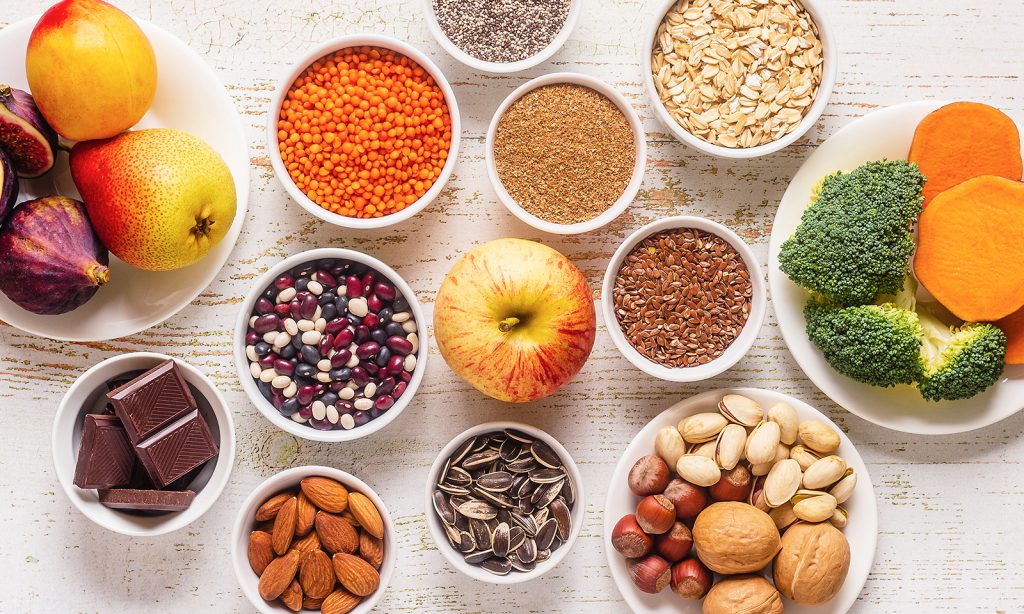
Fiber doesn’t get much attention in nutrition conversations, which is odd given how much it does for the body. Fiber works quietly in the background, supporting digestion and overall health, and the benefits show up gradually in how the body feels day to day rather than in dramatic before-and-after transformations.
Understanding how fiber works helps explain why it matters so much. Fiber moves through the digestive system largely intact, which sounds strange until you consider what happens along the way. It slows down how quickly sugar enters the bloodstream, feeds the beneficial bacteria living in the gut, and keeps digestion moving at a healthy pace.
There are two types: soluble fiber, which dissolves in water and can help moderate blood sugar and cholesterol, and insoluble fiber, which adds bulk and keeps things moving. Most high-fiber foods contain both kinds, so there’s no need to worry about which type you’re getting.
The good news is that fiber shows up in foods most people already eat regularly. Vegetables are one of the easiest places to find it in everyday meals. Broccoli, Brussels sprouts, carrots, sweet potatoes, and leafy greens all have plenty of it, along with vitamins and minerals that make them worth eating for reasons beyond fiber alone. A side of roasted vegetables or a simple salad brings fiber to the table without feeling like you’re eating for health reasons rather than because the food tastes good.
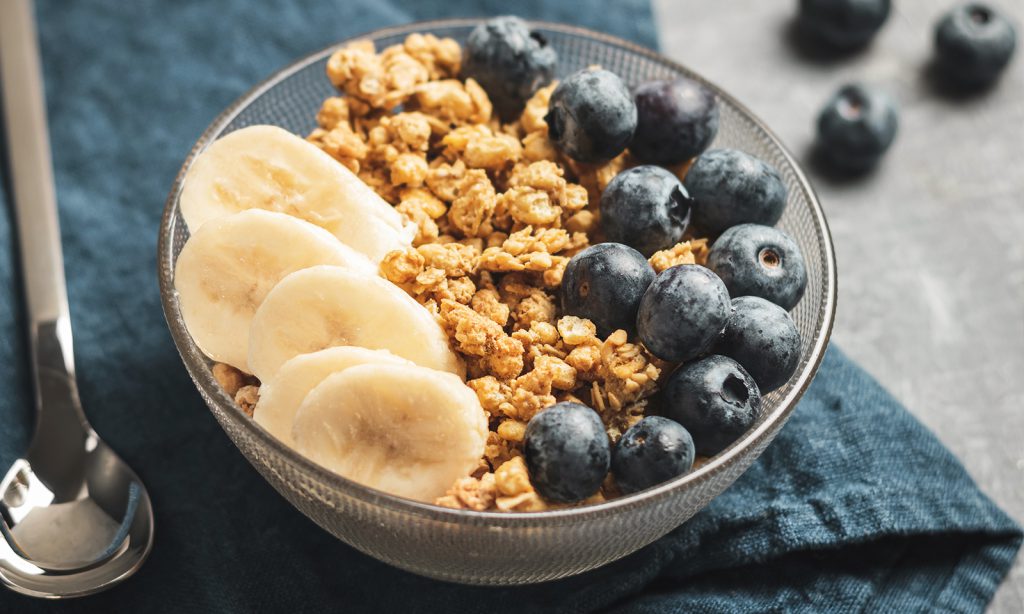
Fruits work similarly, combining fiber with sweet flavors. Apples, pears, berries, and oranges all contain adequate amounts, especially when you eat them whole instead of juiced. The skin on apples and pears holds a lot of their fiber, so we recommend leaving the peel on when you can. Berries are particularly good at packing fiber into small servings, whether you add them to yogurt or oatmeal or just eat them by the handful.
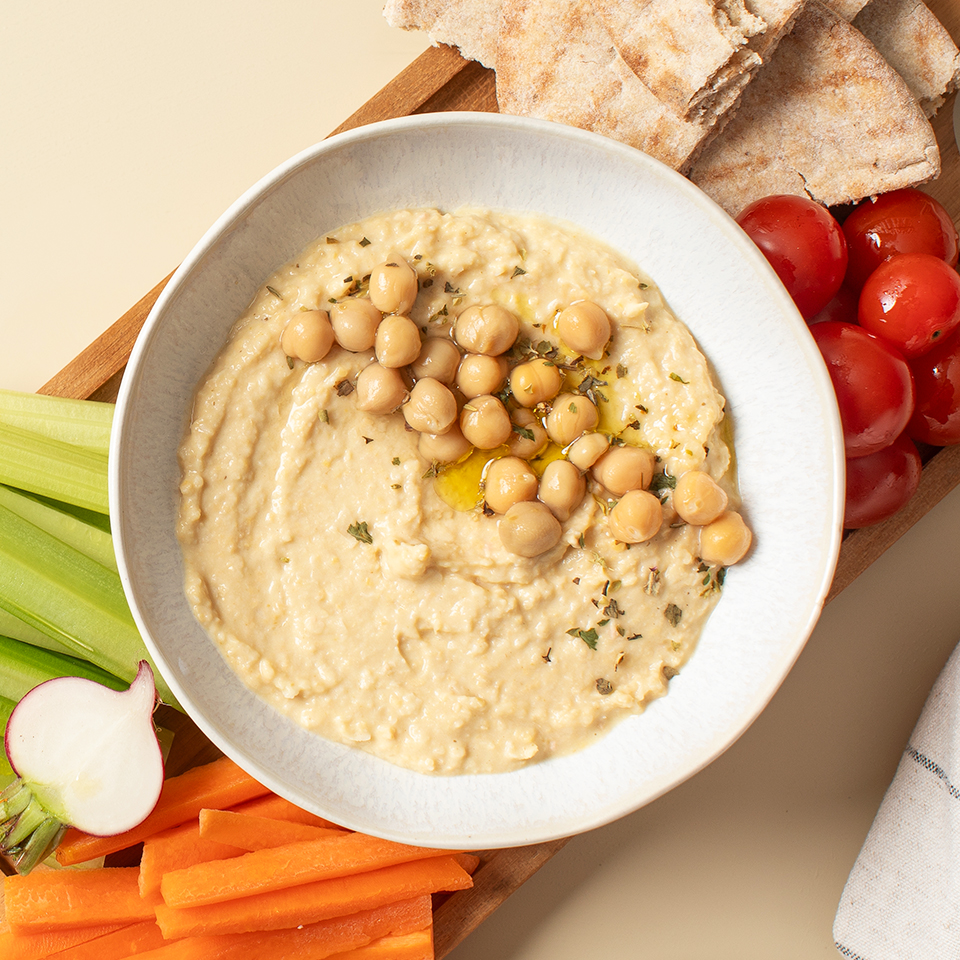
For more concentrated sources of fiber, legumes are hard to beat. Black beans, lentils, chickpeas, and split peas have fed people around the world for centuries, valued as much for their fiber as for their staying power in meals. A cup of cooked lentils has more fiber than a lot of people eat in a whole day. They work in so many different dishes, too — black beans in burritos, lentils in soup, chickpeas mashed into hummus or roasted until crunchy.
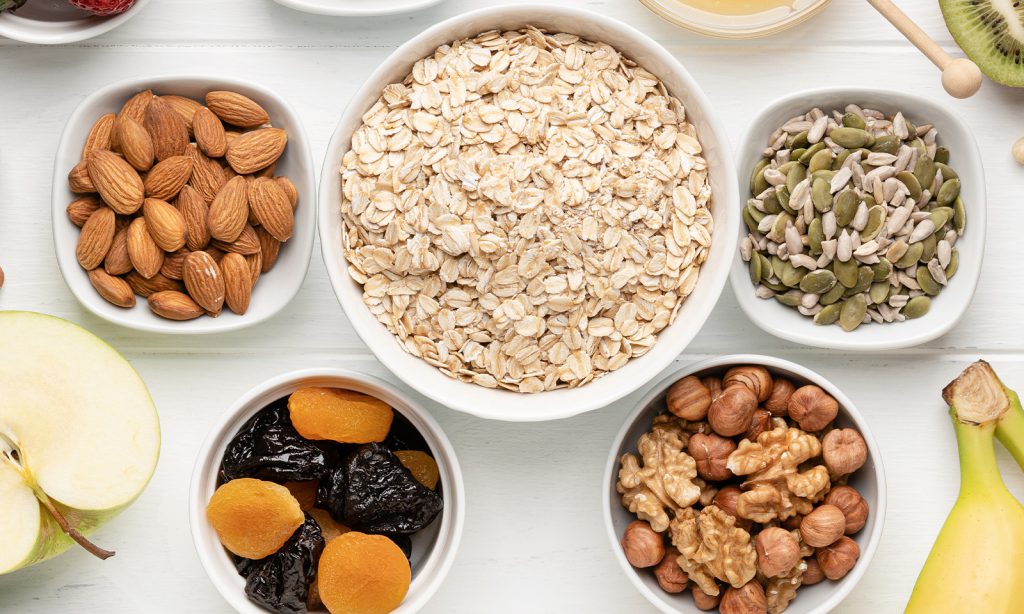
The choice between refined and whole grains makes a bigger difference than many people realize. Whole grains keep the outer layers that white flour and white rice have had removed, and that’s where most of the fiber lives. Oats, brown rice, quinoa, farro, and whole wheat bread all provide fiber that their refined versions are missing. Swapping white rice for brown or choosing whole-grain bread brings more fiber into meals without changing much else about how you cook or eat.
Then there are the small additions that quietly boost fiber intake throughout the day. Nuts and seeds fit fiber into surprisingly small amounts. Almonds, walnuts, chia seeds, and ground flaxseed add fiber to what you’re already eating without taking up much room. Ground flaxseed works particularly well because it blends into smoothies, yogurt, or oatmeal without you really noticing it’s there. A couple of tablespoons in your morning oatmeal adds fiber along with some healthy fats, and the taste stays pretty much the same.
Getting more fiber into your diet doesn’t mean overhauling everything you eat. It’s more about small changes toward whole foods — choosing brown rice when you’re making dinner, adding extra vegetables to your plate, keeping fruit around where you’ll see it and remember to eat it, using beans or lentils in soups and salads, sprinkling some seeds on breakfast.
These small changes build on each other over time, creating habits that support how your body works without feeling like a big project. The secret is finding the fiber-rich foods that fit into what you already like to eat, because consistency with foods you actually enjoy beats perfection with foods you have to force yourself to eat.
How To Add Farm Stand Products to Your Delivery:
Full Circle members – head on over to our online Farm Stand Market to customize your upcoming delivery. Market is open from noon on Thursday until 6 p.m. on your cutoff date. After you confirm your produce items, click the orange button “Confirm and Continue To Other Farm Products” to add farm products to your delivery.
Not part of our farm family? Find out if we deliver to your neighborhood.

Leave a Reply